Intro
Forklift jobs are an important part of modern warehouse and logistics operations. Learn what these roles may involve, which skills are often valued, and how to compare job options before applying.
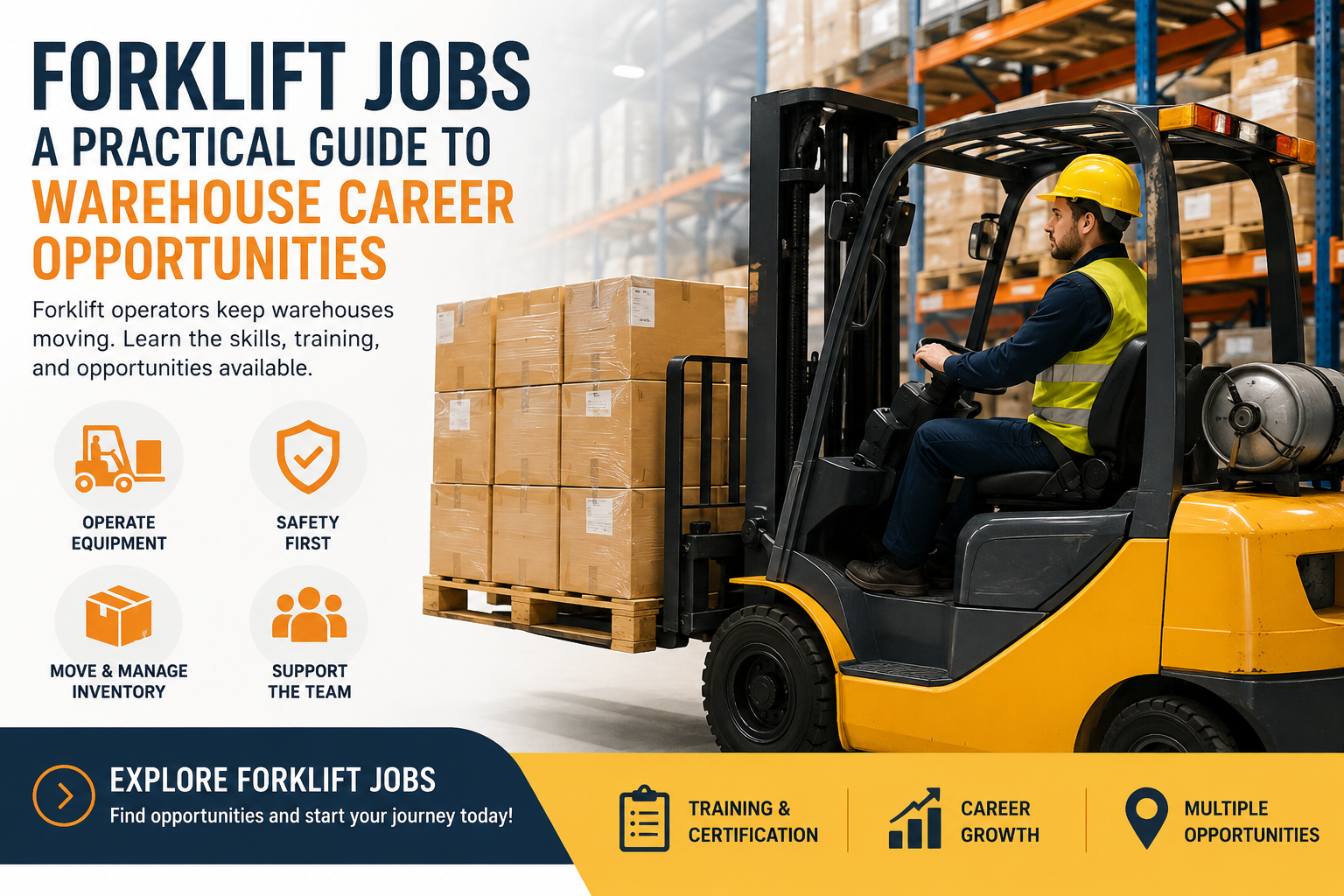
Why Forklift Jobs Matter in Warehouse Operations
Forklift jobs play a key role in keeping warehouse operations organized, efficient, and safe. In many logistics environments, forklift operators help move pallets, load and unload goods, organize inventory, and support daily warehouse workflows. These tasks may look simple from the outside, but they often require focus, awareness, and careful coordination with other team members.
As online shopping, distribution centers, and supply chain operations continue to expand, warehouse teams rely on trained workers who can handle materials properly. A forklift operator may work in areas such as receiving, storage, shipping, order fulfillment, or inventory movement. Because forklifts are used to move heavy or bulky items, safety and accuracy are usually important parts of the role.
For people exploring warehouse jobs, forklift positions can be a practical option to learn about. Some roles may require previous experience, while others may provide training depending on the employer and local rules. Before applying, it is helpful to understand what the job involves, what qualifications may be needed, and what type of warehouse environment fits best.
What Forklift Operators May Do
Forklift job responsibilities can vary by company, industry, and warehouse size. Common tasks may include moving pallets, loading trucks, unloading deliveries, placing items in storage locations, scanning inventory, checking product labels, and supporting picking or packing teams. In some warehouses, forklift operators may also help inspect equipment, follow route instructions, and report damaged goods or safety concerns.
A successful forklift operator usually needs more than equipment-handling ability. Many employers may value attention to detail, communication, time management, and the ability to follow safety procedures. Since warehouse work often involves moving people, machines, and products in the same space, awareness of surroundings is very important.
Some forklift roles may involve different types of equipment, such as counterbalance forklifts, reach trucks, pallet jacks, or order pickers. The equipment used depends on the warehouse layout and the type of goods being handled. This is why job seekers should read each listing carefully and check whether specific training, certification, or equipment experience is mentioned.
Skills and Training to Consider
Forklift jobs may require training or certification depending on the country, region, and employer. Some workplaces may ask for proof that applicants understand safe operation, load handling, inspection routines, and workplace safety rules. Others may offer internal training for selected candidates. Since requirements can differ, checking local regulations and employer expectations is an important step before applying.
Basic warehouse skills can also be useful. These may include reading labels, following instructions, using handheld scanners, understanding inventory locations, and working as part of a team. Physical awareness and steady focus are also important because forklift work often happens in busy environments with shelves, pallets, trucks, and other workers nearby.
People new to warehouse work may start by learning about general logistics tasks before moving into equipment-based roles. Those with warehouse experience may compare forklift openings to see which roles match their background, schedule preferences, and training level.
How to Compare Forklift Job Options
Before choosing a forklift job listing, applicants can compare several details. These may include work environment, shift type, equipment used, training expectations, safety standards, location requirements, and whether the role is full-time, part-time, or seasonal. A clear job listing should explain the main responsibilities and the qualifications needed.
It is also useful to compare the type of warehouse. Some forklift operators work in retail distribution, food storage, manufacturing, construction supply, shipping centers, or third-party logistics facilities. Each setting may have different workflows and equipment needs.
A well-matched forklift job can help workers build practical warehouse experience and understand how logistics operations function from the inside. By reviewing job details carefully, applicants can make a more informed decision before submitting an application.
Explore Forklift Job Opportunities
Forklift jobs can be a practical path for people interested in warehouse operations, logistics, and material handling. These roles may involve equipment operation, inventory movement, teamwork, and safety-focused tasks.
Explore forklift job listings, compare role requirements, and learn more about available warehouse opportunities.